


Comedones
Clogged pores
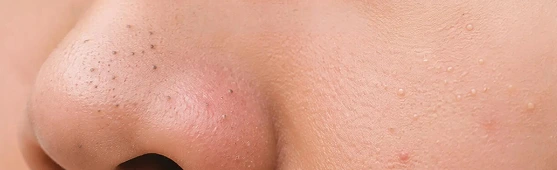
A type of clogged pore. Open comedones are blackheads; closed comedones feel like tiny bumps under the skin and are not red or pink.
Now offering AviClear®, the FDA-cleared acne laser. Request Your Consultation
Acne is a chronic inflammatory condition of the pore and its oil gland — a medical condition, not a cosmetic one. It is the most common skin condition in the United States, and one of the most treatable with the right medications and therapies.
When you are ready to visit us, we can discuss our treatment options.

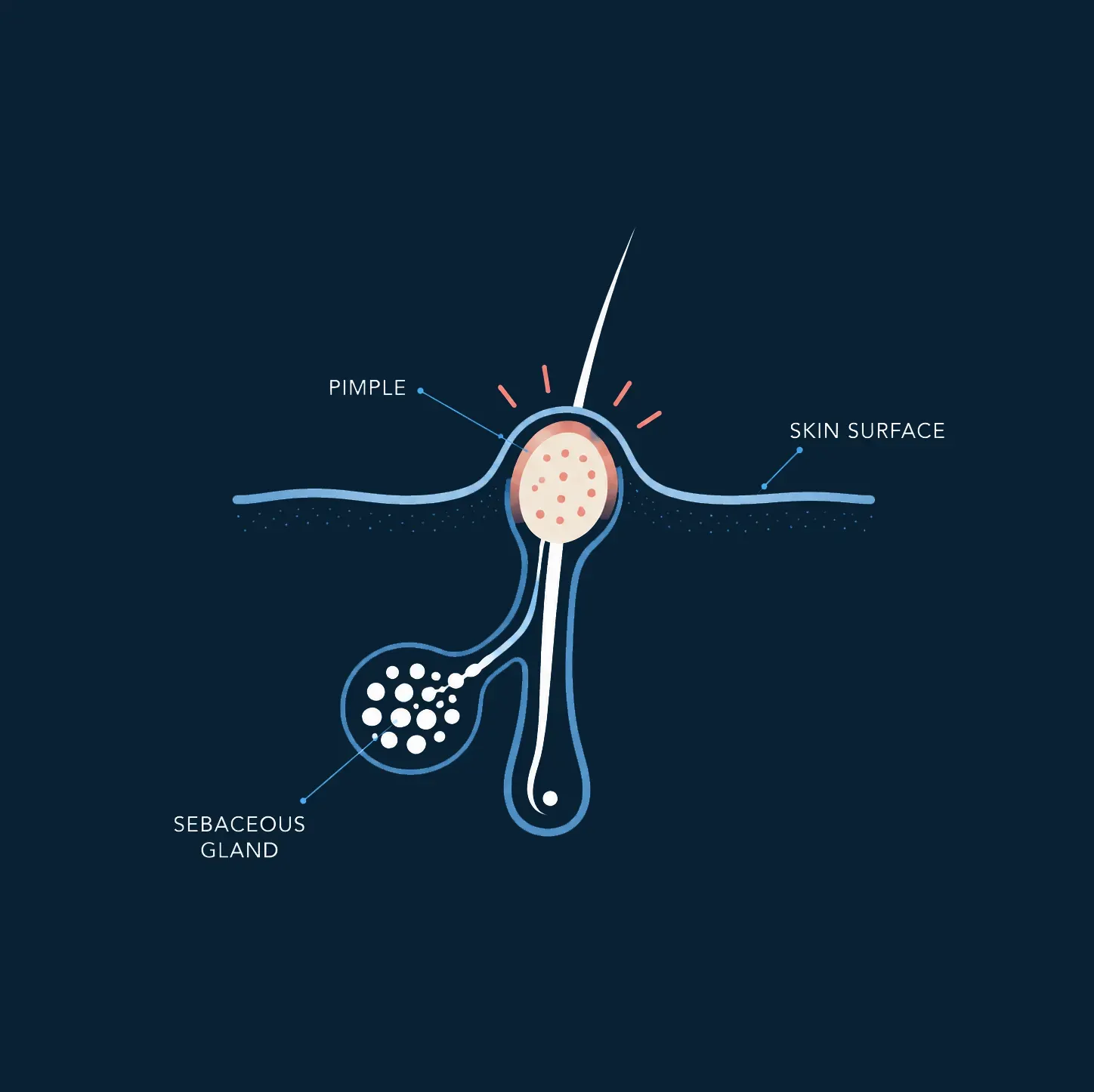
Four skin factors are involved in the formation of acne, and these four components do not happen in any one order. It is the combination and complex interplay of these skin factors that produces acne.
Everyone produces oil. More of it means more susceptibility — part of why acne starts at puberty.
Cutibacterium acnes lives on all skin but some immune systems react to it differently. Some people carry more bacteria, different types and in varying concentrations. This imbalance of the microbiome may cause acne.
Skin normally sheds out of the pore. In acne there is an overproduction of shedding skin cells and these cells stick together, blocking the pore.
Present in every type of acne lesion, and why spots are red, swollen and tender.


Acne is a complex interplay between many things that happen in the skin. While we do not know the root cause of acne, it is likely caused by a combination of factors including genetics, hormones, bacteria, immune system reactivity, and environmental impact such as diet and stress.
Genetics may play a role in acne development. For example, if your parents had acne, you may be prone to acne.
Studies show in times of stress, such as moments prior to exams or job stress, acne may worsen. Similarly, decreasing one’s stress level may improve acne.
Acne is more likely to start or worsen during puberty when hormones are surging. Acne can also worsen for women during different times of their menstrual cycle as hormones fluctuate.
Some forms of hormonal contraception may be more likely than others to cause acne, but on the other hand some forms of contraception, such as certain birth control pills, can be used to treat some acne.
Some studies suggest that certain foods may trigger or worsen acne, although that does not seem to be true for all patients. The strongest dietary cause for acne seems to be dairy products, particularly skim milk and cow’s milk.
These types of milk may be significant factors in the development of acne for some people, and removing them from your diet temporarily may improve acne lesions. However, this does not work for everyone with acne.
The microbiome, which is the natural bacteria and viruses that live on the skin, may play a role in acne development. We all have bacteria on our skin, but some people have different types of bacteria, and in different combinations or proportions.
It is possible that when the microbiome is out of balance, it may make some people more prone to acne.
Although we don’t fully understand the environmental impact on acne, there are several environmental factors that have been hypothesised to worsen or trigger acne. Some theorise that air pollution, humidity, UV radiation, or different climates may impact the development of acne.
However, none of these environmental triggers have been proven to worsen or cause acne.
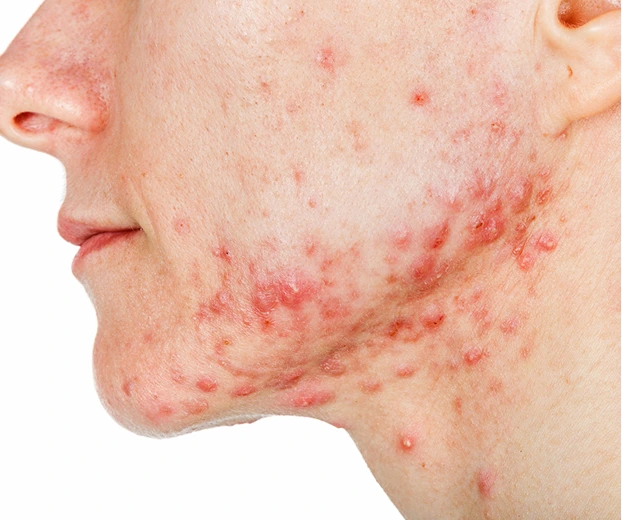
Acne is not one type of lesion. Most people have a mix of different lesions types, and which type dominates decides what will actually clear your skin. All four types can scar — most often the nodules — which is why we would rather treat it early than repair it later.
A type of clogged pore. Open comedones are blackheads; closed comedones feel like tiny bumps under the skin and are not red or pink.
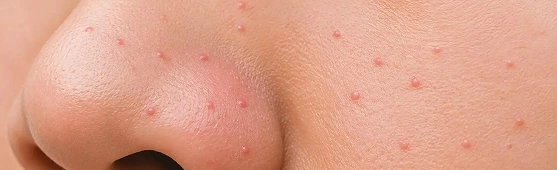
Usually pink or red little bumps under the skin, with no visible pus.
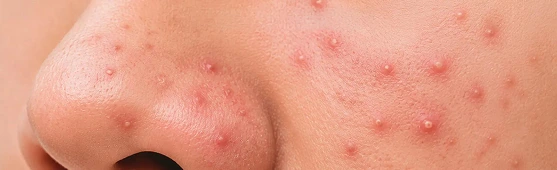
Bumps with a white or yellow centre, where pus is visible just under the skin.
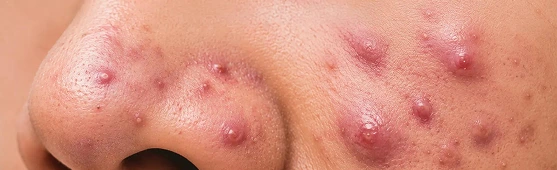
Often larger lumps that are sometimes painful. Some people also refer to these as cysts.
Tell your provider about anything covered by clothing — the chest, shoulders or back. We want to help you get clear skin everywhere it affects you, not just your face. Some of what appears elsewhere on the body isn’t acne at all, and telling the difference is what determines the treatment.
Back acne is very common, but studies show it is often undertreated. There are many treatments that can help, including washes, creams and pills.
Some people feel uncomfortable at the beach or pool, or when wearing a bathing suit, so do feel free to mention it to the dermatologist. Acne on the back ranges from mild to severe nodulocystic acne and can leave several types of scars, so tell us about it and we can treat it to reduce scarring.
Acne on the arms is possible, but a more common condition that resembles it is keratosis pilaris, which most often occurs on the backs of the upper arms.
It is more a skin type than a rash or acne, and certain creams can reduce its appearance. It is not dangerous or contagious, and it is common in children and younger adults.
Some people think they have acne on the scalp, but they may actually have another type of inflammation called folliculitis. Other scalp conditions that can mimic acne include dissecting cellulitis of the scalp and folliculitis decalvans.
Folliculitis is a bacterial or fungal infection of the hair follicles, frequently seen on the legs or in the pubic region, and it can look similar to acne. Shaving may make it worse. It is often treated with antibiotics or antifungal medication.
Some adult women are especially prone to hormonal acne on the front and sides of the neck.
A different condition can appear on the back of the neck, particularly in patients who shave there, called pseudofolliculitis nuchae. On the front of the neck, the face or the beard area, the same thing is called pseudofolliculitis barbae.
Some patients experience cyst-like lesions where the leg meets the trunk, in the inguinal crease. This is not technically acne but a condition called hidradenitis suppurativa (HS).
HS commonly occurs in the inguinal crease, and can also be found in the underarms, on the buttocks, or under the breasts.
A growing number of women have acne in their thirties, forties and beyond, including many who had clear skin as teenagers. It does not mean your hormones are imbalanced. It means they are activating the oil glands in your skin enough to cause breakouts.
Along the jawline, lower cheeks and neck, often deeper and tender, and frequently worse just before or after your period.
Menstruation, menopause, PCOS, PMOS or raised androgen levels.
Spironolactone, certain oral contraceptives, or clascoterone. AviClear laser treatment may also be used alone or in conjunction with the medical treatment options.

Before and after a course of isotretinoin, photographed at our Back Bay practice.
Cheek
 Actual Patient Before
 Actual Patient After
Forehead
 Actual Patient Before
 Actual Patient After
Individual results vary. Isotretinoin is prescribed for severe or scarring acne and requires monitoring throughout the course, which your dermatologist will explain in full before you start.
"I had tried everything for my acne before coming here. Dr. Graber explained exactly what was happening in my skin and why nothing had worked, and the plan she put me on finally did."
Some of these are harmless. Others are the reason people wait years before seeing a dermatologist.
The most damaging advice there is. Untreated acne can leave dark spots and permanent scars as it clears, and scarring is far harder to reverse than acne is to treat.
Around 20% of adults between 25 and 44 have acne, and adult-onset acne in women is becoming more common, not less.
Acne is not a hygiene problem. Over-washing and scrubbing irritate the skin and frequently make inflammation worse.
Squeezing pushes inflammation deeper into the skin. It is one of the most reliable ways to turn a spot into a scar.
Sun exposure can briefly mask redness, then worsens post-acne marks and adds photodamage. It also isn’t compatible with many acne medications.
Harsh over-the-counter products can strip and inflame the skin. Most prescription regimens need eight to twelve weeks, whatever the strength.
If over-the-counter products haven’t worked after two to three months, if you have deep or painful lesions, if you’re seeing marks or scars forming, or if your skin is affecting how you feel day to day. Earlier is always better, because preventing scarring is far easier than treating it.
Many prescription treatments are covered by insurance, though coverage varies by plan. Cosmetic add-ons like the AviClear laser are typically self-pay. We disclose costs before anything begins.
Most patients see visible improvement within 6–12 weeks of starting a consistent plan. Isotretinoin courses run several months but aim for lasting remission.
Diet is one factor among several. Dairy, and skim milk in particular, is the most consistently linked food, but genetics, hormones and bacteria usually matter more.
Hormonal acne tends to sit along the jawline and lower cheeks, flares around your cycle, and often needs hormonal therapy rather than topicals alone.
Only for certain treatments, such as isotretinoin or spironolactone, which require baseline and periodic monitoring. Your dermatologist will let you know if it applies to you.
It can, especially hormonal acne. Isotretinoin offers the best chance of lasting remission; other treatments usually need a maintenance routine to keep skin clear.
Yes. Truncal acne is common and often undertreated. We can extend your plan to cover the back, chest and shoulders alongside your face.
See a board-certified Boston dermatologist who treats acne every day. No referral needed, and most new patients are seen within days.